


What Is the Difference Between Grooved, Perforated and Slotted Acoustic Timber Panels?
Architects and designers often ask which type of timber acoustic panel is best for their project: grooved, perforated or slotted. Each system controls sound in a slightly different way and creates a distinct visual effect. Murano Acoustic Timber Panels are available in all three styles, so you can choose the look and performance that suits your interior.
Grooved Acoustic Timber Panels
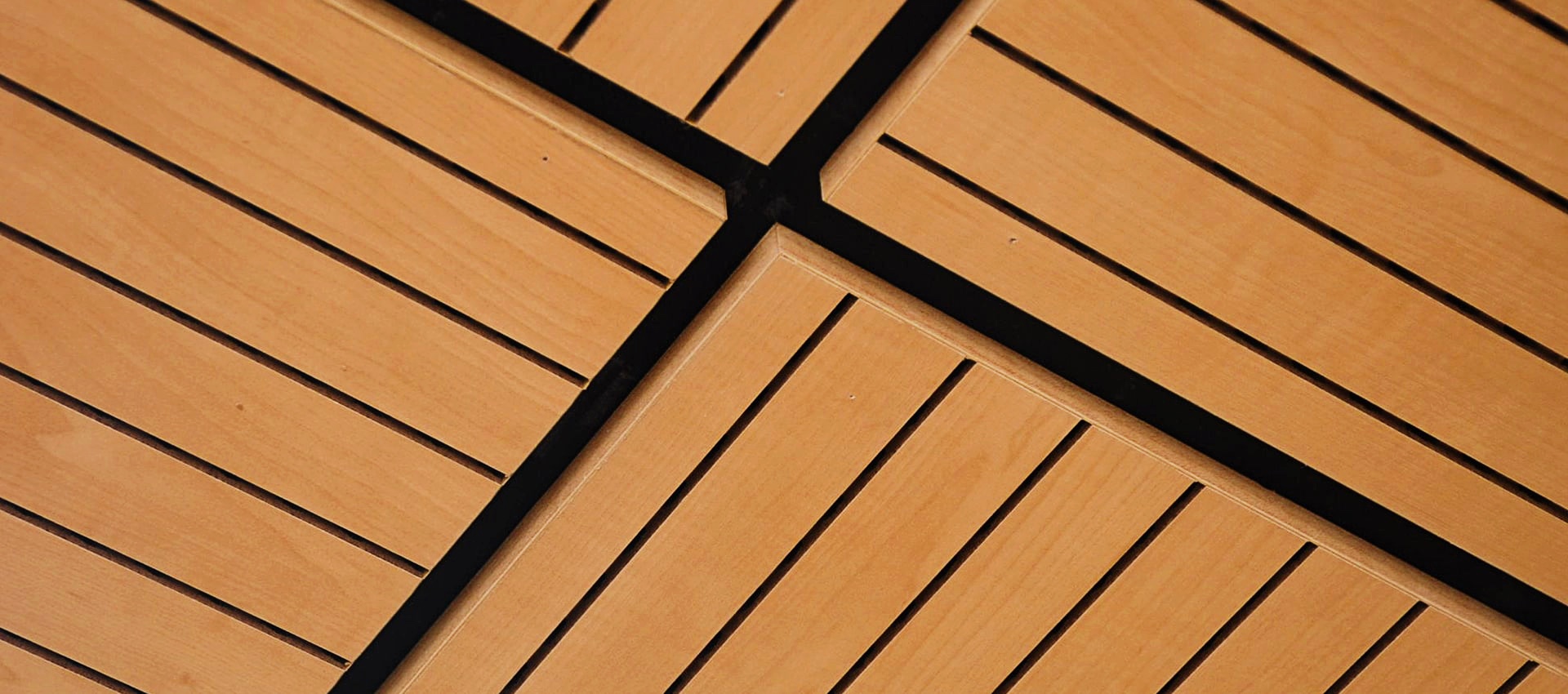
Grooved acoustic timber panels have a series of linear grooves cut into the face of the panel. Behind the grooves, there is usually an acoustic backing or slot that allows sound to be absorbed.
Visually, grooved panels create a clean, linear effect that works well in contemporary auditoriums, lecture theatres, boardrooms and worship centres.
- Appearance: continuous lines running along the panel, often with a regular repeat pattern.
- Acoustics: good absorption across mid and high frequencies when used with the correct backing and airgap.
- Applications: walls and ceilings where a crisp, directional timber look is required.
Perforated Acoustic Timber Panels
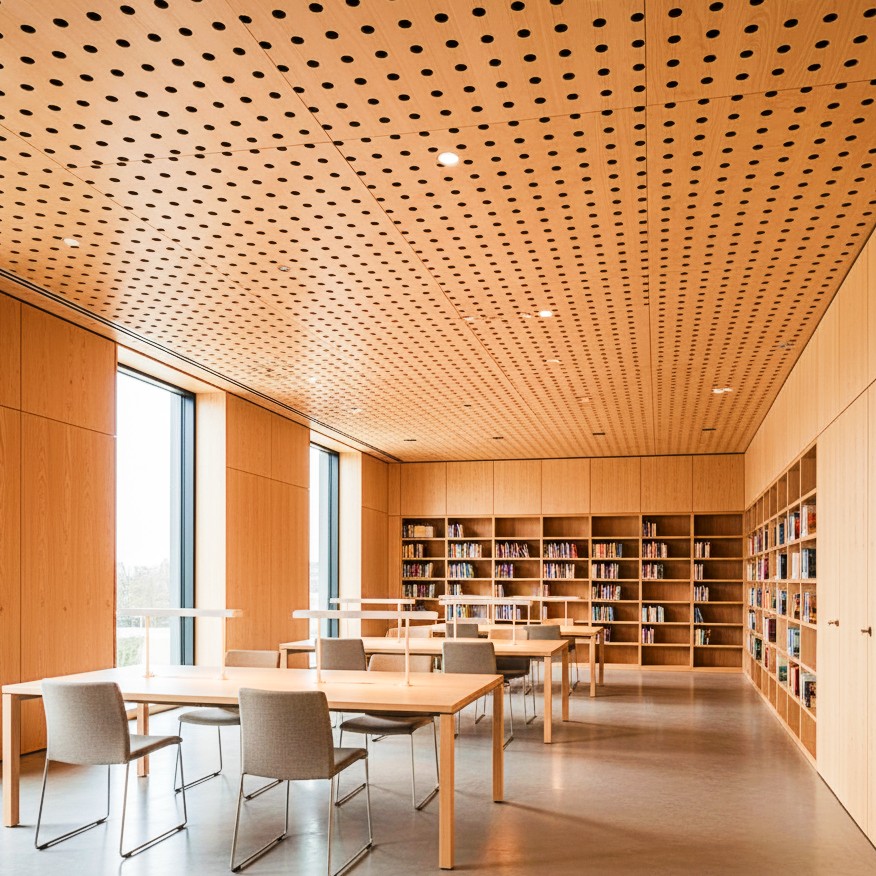
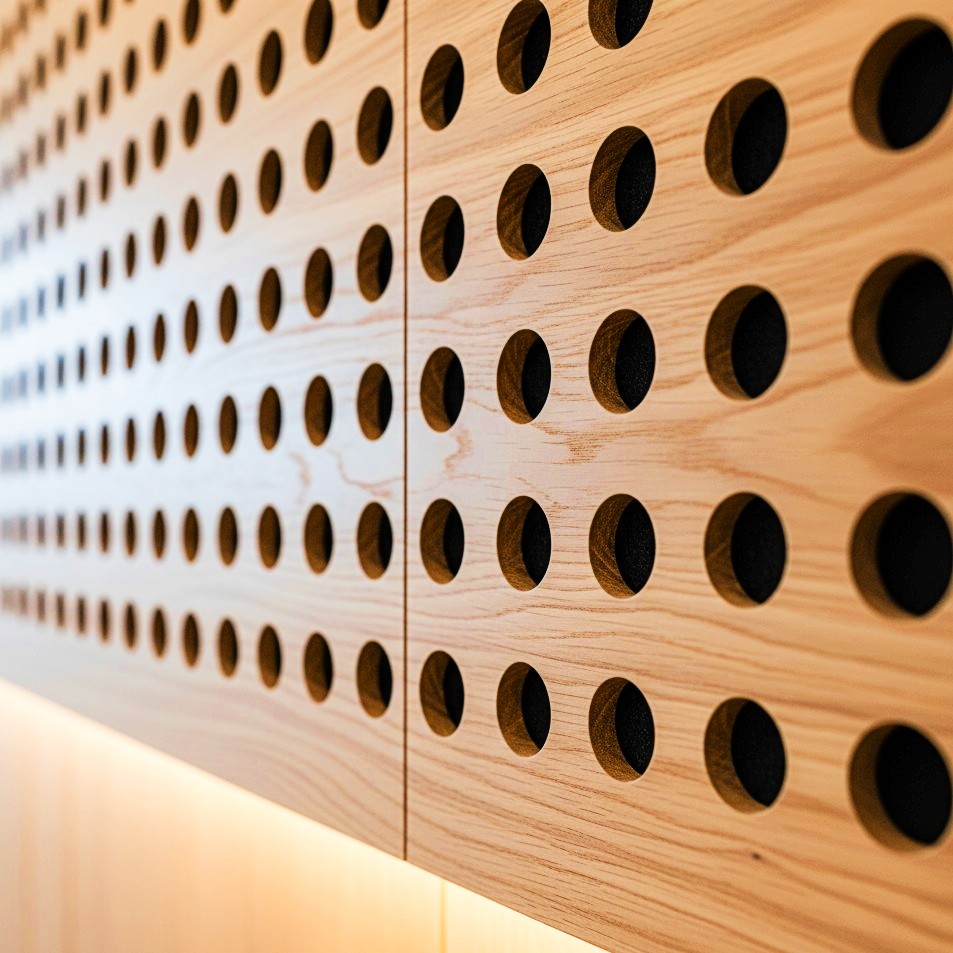
Perforated panels use a pattern of round or shaped holes through the timber face. Behind the perforations there is an acoustic absorber, which may be an insulation layer or acoustic blanket.
This style provides a classic acoustic look often seen in theatres, performance spaces and multifunction halls.
- Appearance: regular grid or patterned perforations that read as a textured field from a distance.
- Acoustics: strong sound absorption when hole diameter, spacing, backing and cavity depth are correctly specified.
- Applications: walls and ceilings in auditoriums, studios, schools and large public spaces.
Slotted Acoustic Timber Panels
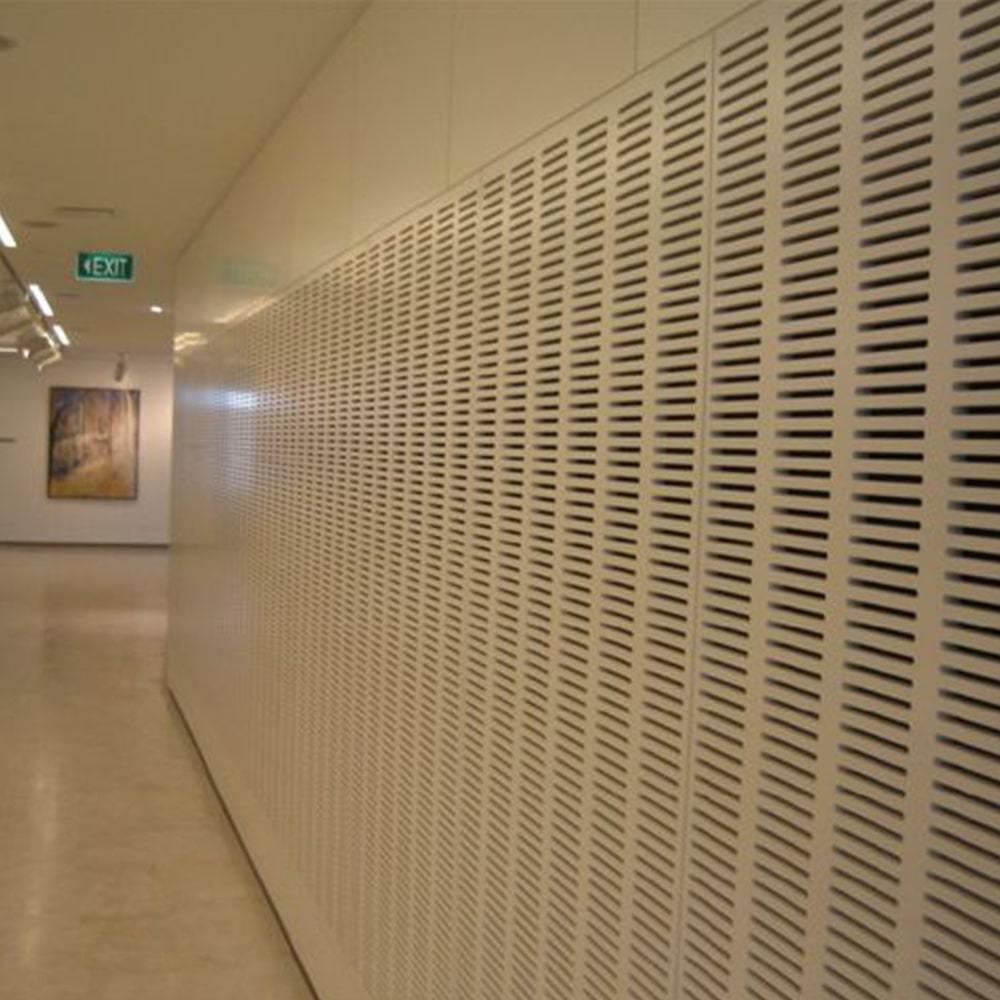
Slotted timber panels use long, narrow slots in the face of the board instead of round holes. The slots open into an acoustic cavity filled or backed with sound-absorbing material.
Slotted designs combine elements of both grooved and perforated panels: a strong linear look with the absorption performance of a perforated system.
- Appearance: long, narrow slots that can be spaced to create fine or bold linework.
- Acoustics: very effective absorption, especially when slot width, spacing and backing are tuned to the project.
- Applications: feature walls, ceilings and curved surfaces where both aesthetics and performance are critical.
Choosing the Right Murano Panel Type
When selecting between grooved, perforated and slotted Murano panels, consider:
- Design intent: linear or directional look (grooved / slotted) versus a more uniform acoustic texture (perforated).
- Acoustic target: required NRC, room use (speech, music, multipurpose) and reverberation time goals.
- Installation: wall or ceiling, flat or curved surfaces, access to services behind panels.
- Finish: preferred timber veneer, paint colour or clear finish to match joinery and furniture.
Murano Acoustic Timber Panel Styles at a Glance
| Panel Type | Visual Character | Typical Use | Key Advantage |
|---|---|---|---|
| Grooved | Strong linear lines, directional grain emphasis. | Auditoriums, lecture theatres, boardrooms, worship centres. | Clean, architectural appearance with reliable absorption. |
| Perforated | Regular pattern of round or shaped holes. | Theatres, multipurpose halls, school halls, public spaces. | Classic acoustic panel look with flexible performance tuning. |
| Slotted | Narrow slots creating refined linear patterns. | Feature walls, premium interiors, curved or complex surfaces. | Combines strong aesthetics with high acoustic performance. |
Need Help Selecting the Right Murano Panel?
The best option often depends on the room volume, use, desired reverberation time and architectural language. Our team can review your drawings or acoustic brief and recommend whether grooved, perforated or slotted Murano panels will suit your project.
Contact Murano Acoustics for technical data, sample panels and advice on panel type, spacing and finishes.



Frequently Asked Questions About Murano Timber Acoustic Panels
What is the main difference between grooved and perforated timber panels?
Grooved panels use linear grooves in the surface to reveal an acoustic backing, while perforated panels use a pattern of round holes through the face into an absorber.
When should I choose slotted timber acoustic panels?
Slotted panels are ideal when you want a strong linear look combined with high acoustic performance, particularly on feature walls or complex surfaces.
Do grooved, perforated and slotted panels all provide sound absorption?
Yes. All three rely on openings in the timber face combined with an acoustic backing and cavity to absorb sound rather than reflect it.
Which panel type is best for auditoriums and theatres?
Both perforated and grooved Murano panels are commonly used in performance spaces. The best choice depends on the design intent and acoustic targets.
Can Murano timber panels be supplied with different veneers and finishes?
Yes. Murano acoustic timber panels can be supplied in a range of timber veneers and painted finishes to match joinery and interior design schemes.