


Acoustic Timber Panels for Libraries
Linear grooved timber acoustic panels for quieter reading areas, collaborative spaces and contemporary Australian libraries.
Library Acoustic Panels for Modern Public Spaces
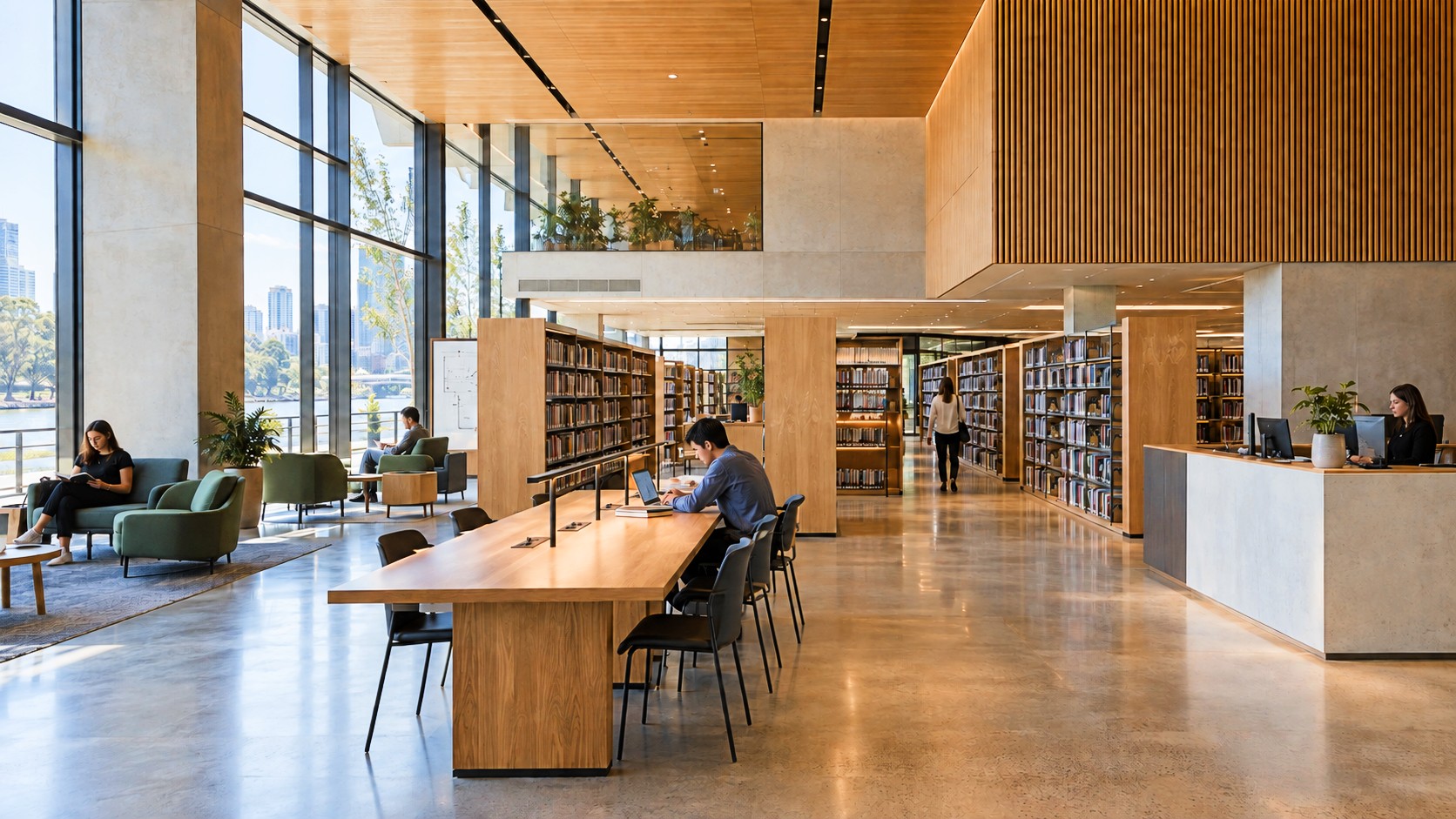
Libraries have changed considerably from the traditional quiet reading room. Contemporary libraries often combine individual study areas, children’s zones, meeting rooms, technology spaces, community facilities and collaborative work areas within the same building.
This creates an acoustic challenge. A library must provide quiet spaces while also allowing conversation, learning and collaboration to take place nearby.
Well-designed library acoustic panels in Australia can help control reverberation and reflected sound while maintaining the architectural character of the interior.
Linear grooved timber acoustic panels provide architects and public-sector designers with a practical way to combine acoustic absorption with a durable architectural timber finish.
Why Modern Libraries Can Become Noisy
Modern libraries perform many different functions within the same building. While some visitors require quiet concentration, other areas may be designed for conversation, group learning and community activities.
Large Open-Plan Areas
Open library layouts allow sound to move easily between reading areas, circulation spaces and collaborative zones. Without sufficient acoustic absorption, conversations can be heard well beyond the area where they originate.
Hard Architectural Finishes
Glass, concrete, plasterboard, timber flooring and other durable finishes can reflect sound rather than absorb it. Repeated reflections can increase reverberation and overall background noise.
Collaborative Learning Areas
Libraries increasingly include group tables, meeting areas and flexible learning spaces. These activities naturally generate more sound than traditional individual reading areas.
Children’s Areas
Children’s programmes, storytelling and educational activities are an important part of many public libraries, but they can also create concentrated periods of higher noise.
Community and Technology Spaces
Computer areas, multimedia facilities, meeting rooms and community events can add further sound sources within a building originally associated primarily with quiet study.
How Acoustic Timber Panels Help Libraries
Acoustic panels absorb a proportion of the sound energy that would otherwise reflect from walls and ceilings. Reducing these reflections can help control reverberation and create more comfortable conditions across different library zones.
Linear grooved timber acoustic panels can be incorporated into walls or ceilings while maintaining the appearance of an architectural timber lining.
A typical timber acoustic system may include:
- A linear grooved or slotted timber face
- Acoustic openings within the panel construction
- Acoustically absorptive material behind the timber surface
- A supporting frame or fixing system
- An air cavity where required by the acoustic design
The acoustic performance of the completed installation depends on the panel construction, groove configuration, acoustic backing, cavity and method of installation.
This allows acoustic treatment to be integrated into the architecture rather than added as a visually separate element.
Where Acoustic Panels Can Be Used in Libraries
| Library Area | Acoustic Consideration | Potential Treatment |
|---|---|---|
| Quiet reading areas | Speech and activity from surrounding spaces | Acoustic wall or ceiling panels |
| Open study areas | Reflected conversation and movement | Linear grooved timber wall panels |
| Collaborative zones | Group discussion and higher speech levels | Wall and ceiling absorption |
| Children’s areas | Storytelling, learning and group activities | Durable wall and ceiling acoustic treatments |
| Meeting rooms | Speech clarity and reverberation | Timber acoustic wall panels |
| Entry and circulation areas | Foot traffic and general activity | Upper-wall or ceiling treatment |
| Community spaces | Presentations, events and larger groups | Project-specific wall and ceiling absorption |
Linear Grooved Timber Acoustic Panels
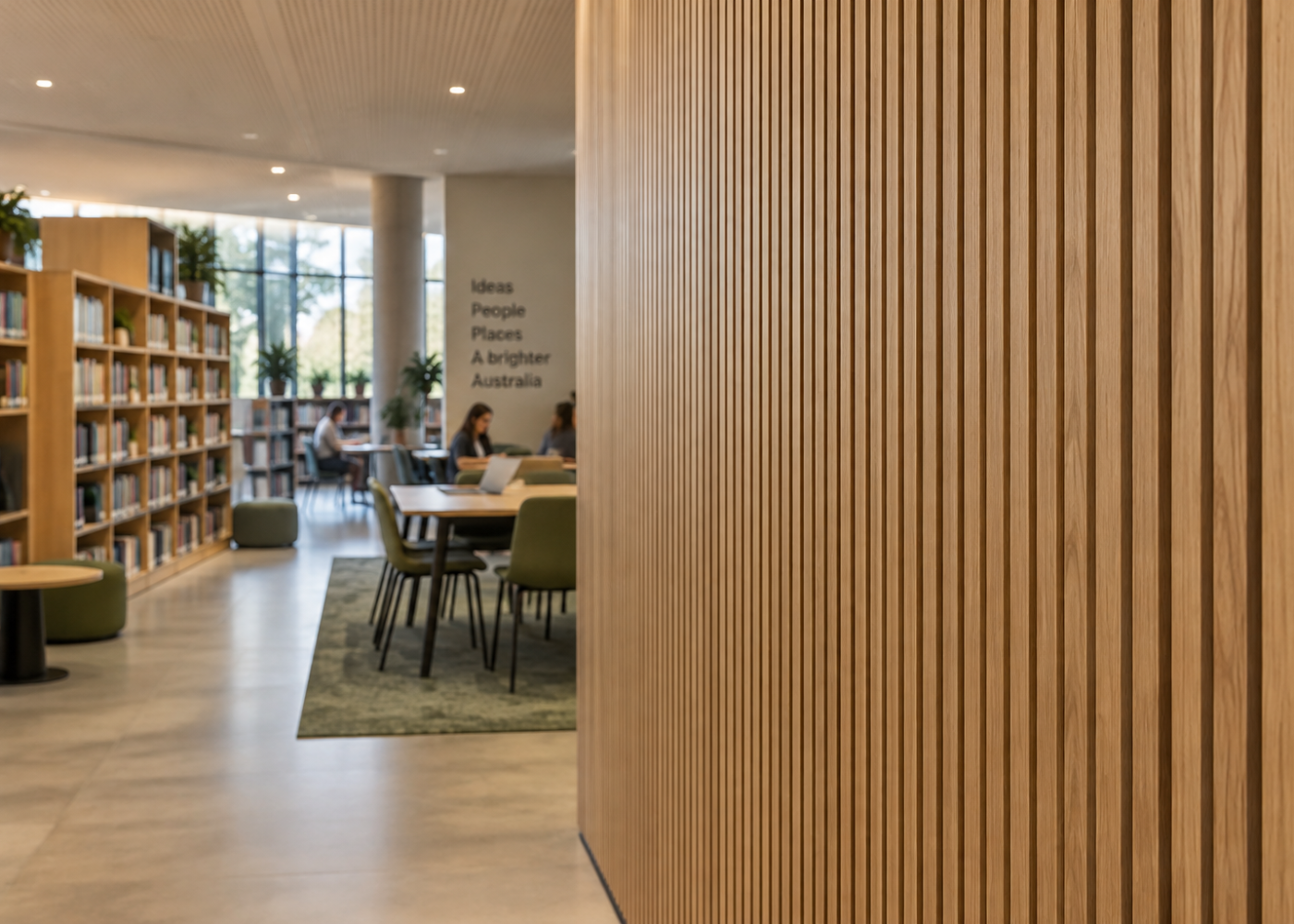
Linear grooved timber acoustic panels are particularly suited to library interiors where architects want the acoustic treatment to form part of the architectural finish.
The linear pattern provides a clean and ordered appearance that can work well across large wall or ceiling areas. Timber finishes can also be coordinated with shelving, joinery, furniture and other interior materials.
Design options may include:
- Linear groove patterns
- Timber veneer or decorative finishes
- Different panel modules
- Horizontal or vertical orientation
- Wall and ceiling applications
- Concealed fixing systems
- Acoustic backing materials
- Integration with lighting and building services
The acoustic panel should be considered as a complete system, including the timber face, acoustic backing and installation cavity where required.
Design Considerations for Libraries and Public Buildings
Library acoustics should be considered during the early planning stages, particularly where quiet reading areas and collaborative spaces will be located within the same open environment.
Important design considerations include:
- Location of quiet and collaborative zones
- Required acoustic performance
- Wall and ceiling areas available for treatment
- Panel module and orientation
- Timber finish and relationship with surrounding joinery
- Acoustic backing and cavity requirements
- Fire performance and project compliance requirements
- Impact resistance in public areas
- Integration with lighting and building services
- Cleaning and maintenance
- Access for future servicing
Public library projects may also require coordination between architects, acoustic consultants, interior designers, building-services consultants and the relevant government or council project team.
Planning the acoustic treatment early generally provides greater freedom to integrate the panels into the architecture and helps avoid the need for additional treatment after the building is occupied.
L
Balancing Quiet Spaces and Collaboration
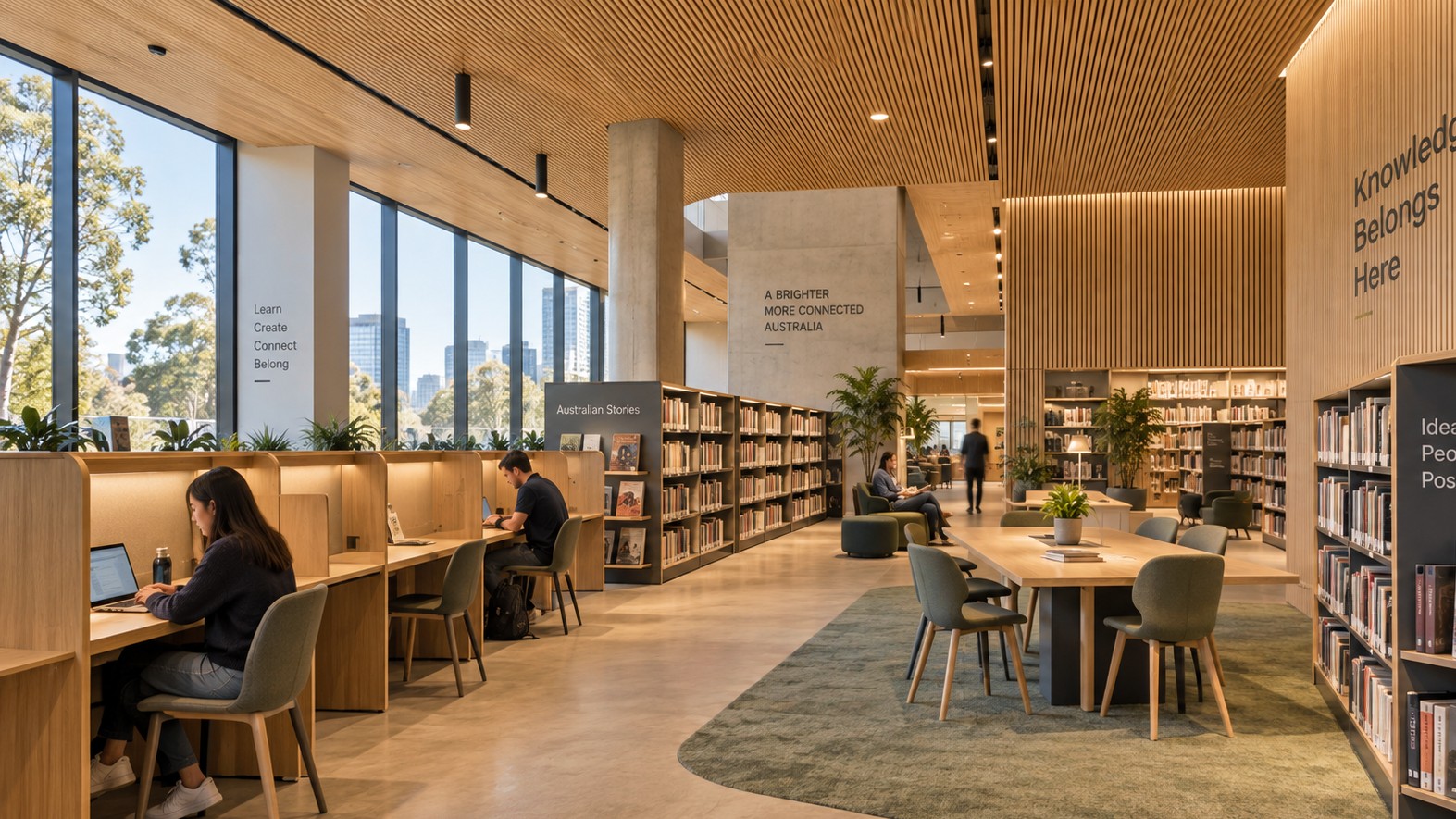
A modern library does not need to be silent throughout the entire building. Different areas can support different levels of activity.
The acoustic objective is to prevent sound from active areas from unnecessarily dominating quieter spaces.
Appropriate acoustic treatment can help create:
- More comfortable quiet reading areas
- Improved conditions for individual study
- Better speech clarity in meeting and learning areas
- More controlled collaborative spaces
- Reduced build-up of background noise
- Improved acoustic separation between different activity zones
Combining acoustic absorption with thoughtful space planning can allow quiet study, community activity and collaboration to operate successfully within the same library.
Acoustic Timber Panels for New and Existing Libraries
New Library Projects
For new libraries, acoustic treatments can be incorporated into the architectural design from the beginning. Wall and ceiling panels can be coordinated with shelving layouts, lighting, building services, joinery and furniture.
This allows the acoustic system to become part of the architecture rather than appearing as a later addition.
Existing Libraries
Older libraries are also increasingly being adapted to provide collaborative learning, technology areas and community spaces. These changes can create acoustic conditions that were not anticipated when the building was originally designed.
Timber acoustic panels can often be retrofitted to selected wall or ceiling areas to increase sound absorption while also updating the appearance of the interior.
Retrofit considerations may include:
- Existing wall and ceiling construction
- Available fixing points
- Existing shelving and joinery
- Lighting and building services
- Installation while the library remains operational
- Access and maintenance requirements
Murano Acoustic Timber Panels for Libraries
Murano can assist architects, designers and public-sector project teams with linear grooved timber acoustic panels for libraries, learning environments and community facilities.
Frequently Asked Questions
Why are acoustic panels important in modern libraries?
Modern libraries combine quiet study, collaborative learning, children’s activities and community spaces. Acoustic panels help reduce reflected sound and control reverberation so these different activities can operate more comfortably within the same building.
Are timber acoustic panels suitable for library interiors?
Yes. Timber acoustic panels combine sound absorption with an architectural finish and can be coordinated with shelving, joinery, ceilings and other interior elements.
What are linear grooved acoustic panels?
Linear grooved acoustic panels use grooves or slots within the timber surface to allow sound energy to reach acoustic material positioned behind the visible panel face.
Can acoustic timber panels be installed in an existing library?
Yes. Acoustic panels can often be retrofitted to existing wall and ceiling areas. The most suitable locations will depend on the building construction, available surfaces and acoustic requirements.
Can libraries have both quiet and collaborative spaces?
Yes. Appropriate space planning and acoustic treatment can help separate quieter study areas from collaborative and community zones while allowing both functions to operate within the same library.