Acoustic Timber Panels for Offices and Workspaces
Creating quieter, more productive workplaces with acoustic timber wall and ceiling solutions.
Murano Acoustic Timber Panels for Office Interiors
Modern offices bring together open-plan work areas, glass partitions, hard floors, and busy collaboration zones. While these spaces look contemporary, they can also be noisy and distracting. Murano Acoustic Timber Panels provide a practical way to manage sound in offices while maintaining a refined, professional appearance.
From reception areas and boardrooms to open studios and quiet rooms, Murano panels support speech clarity, privacy, and comfort. They help businesses create workplaces where staff can concentrate, meet, and communicate clearly.
Improved Acoustic Comfort in Offices
High noise levels and long reverberation times can make it difficult for teams to focus or hold meetings without disturbance. Murano Acoustic Timber Panels absorb unwanted sound and reduce echo, providing a more balanced acoustic environment. This allows conversations to remain clear without carrying across open work areas.
Professional Timber Aesthetic
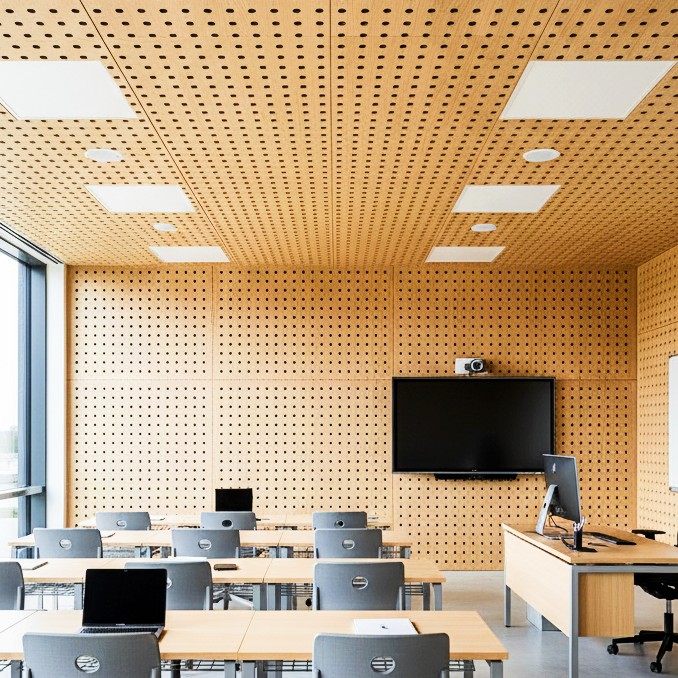
First impressions matter in corporate settings. Murano panels combine acoustic performance with a natural timber finish that suits reception areas, executive offices, and client meeting rooms. A range of timber colours and patterns allows designers to create interiors that feel warm, considered, and consistent with the company’s brand.
Supporting Focus, Privacy, and Collaboration
Offices need to accommodate different ways of working—individual focus, small group discussions, and larger meetings. By improving sound control, Murano Acoustic Timber Panels help reduce distractions in open-plan areas and improve privacy in adjoining spaces. Staff can focus on tasks while meeting rooms and breakout zones remain comfortable for conversation.
Flexible Design Options for Office Fitouts
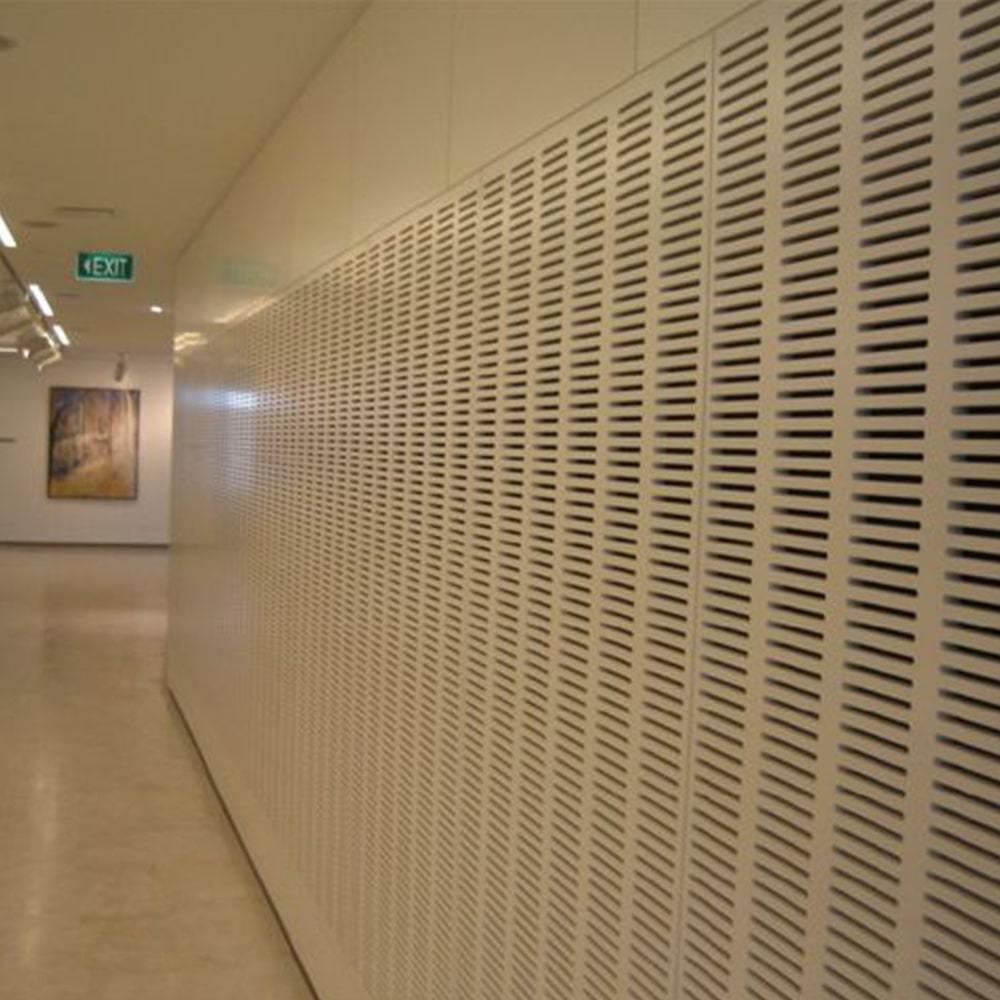
No two offices are the same. Murano panels can be configured as wall linings, ceiling features, or acoustic backdrops behind workstations and collaboration areas. Options include different slot or perforation patterns, panel sizes, layouts, and timber finishes, allowing designers to address both acoustic and visual requirements.
- Reception and Lobby Areas: Reduce echo in double-height or hard-surface spaces.
- Boardrooms and Meeting Rooms: Improve clarity for in-person and video conferencing.
- Open-Plan Workspaces: Limit noise build-up and reduce cross-talk.
- Breakout and Collaboration Zones: Keep informal conversations comfortable without overwhelming nearby desks.
- Executive Offices: Provide a quiet, refined environment for confidential discussions.
Durable and Low Maintenance
Office interiors require finishes that look good over time. Murano Acoustic Timber Panels are made from high-quality materials with durable coatings suited to commercial use. They are simple to maintain, usually requiring only occasional dusting or a light wipe to keep surfaces looking clean and presentable.
Suitable for New Fitouts and Refurbishments
Murano systems can be incorporated into new office projects or used to upgrade existing spaces where acoustics are a concern. Panels can be installed over existing walls or as part of a new lining system, making them suitable for staged refurbishments or tenancy changes.
Environmental Considerations
Many Murano panel options use responsibly sourced timber and can support sustainability objectives for commercial buildings. Where required, acoustic and material data can be provided to assist with project documentation and compliance.
Frequently Asked Questions
Why are acoustic panels important in office design?
Offices often have hard surfaces that reflect sound, leading to echo, raised speech levels, and distraction. Acoustic panels help absorb sound, making spaces more comfortable for staff and visitors.
Where should Murano panels be installed in an office?
Common locations include boardrooms, reception areas, open-plan work zones, phone rooms, and collaboration spaces. Panels are usually placed on key wall or ceiling surfaces where sound reflections are strongest.
Can Murano acoustic panels match our existing interior finishes?
Yes. Murano panels are available in a range of timber colours and patterns. They can be selected to complement existing joinery, doors, and furniture, keeping the office design consistent.
Do Murano panels help with confidentiality and speech privacy?
Murano panels reduce sound reflections within a room, which can help conversations feel more contained and improve comfort. Control of sound transmission between rooms also depends on the wall and door construction.
Are Murano acoustic timber panels easy to maintain in busy offices?
Yes. The panels are designed for commercial interiors and require minimal maintenance. Regular dusting and a light wipe when needed are usually sufficient.
Ready to Improve Acoustics in Your Office?
Murano Acoustic Timber Panels offer a reliable way to manage sound, support staff comfort, and maintain a professional timber finish in office interiors.
Contact us today for design advice, samples, or technical information for your next workplace project.