


Timber Acoustic Panels in Architectural Interiors
Timber acoustic panels are widely used in architectural interiors where designers want to combine natural materials with improved acoustic conditions. Auditoriums, lecture theatres, offices, hospitality venues and public buildings frequently rely on timber acoustic systems to manage reverberation while maintaining a refined interior finish.
Among the most common timber acoustic systems used in these environments are perforated timber acoustic panels and slotted timber acoustic panels. While both systems serve a similar purpose, they differ in their surface design, visual expression and the way sound enters the acoustic backing behind the panel.
Perforated vs Slotted Timber Acoustic Panels
Architects often compare perforated and slotted timber panels when designing acoustic wall or ceiling treatments. Both systems are intended to control sound reflections in interior spaces while preserving the visual warmth and texture of timber.
It is important to understand that timber itself does not absorb sound. A solid timber surface will generally reflect sound energy within a room. In acoustic timber panel systems, the visible timber surface acts as a decorative layer that allows sound to pass through openings in the panel to acoustic insulation positioned behind the panel.
The acoustic insulation behind the panel performs the sound absorption, while the perforations or slots determine how sound energy enters the panel system and which frequencies are absorbed most effectively.
How Timber Acoustic Panels Control Sound
Timber acoustic panels work by combining a perforated or slotted timber face with acoustic backing material installed behind the panel. When sound waves reach the panel surface, a portion of the sound passes through the openings in the timber face and into the cavity behind the panel.
Within this cavity, acoustic insulation absorbs sound energy and reduces the level of reflected sound returning into the room. This process helps control reverberation and improves speech clarity in spaces where many hard surfaces would otherwise reflect sound.
The acoustic response of a timber panel system depends on several design factors including the open area of the panel surface, the spacing of perforations or slots, the thickness of the backing insulation and the depth of the cavity behind the panel.
How Perforated Timber Acoustic Panels Work
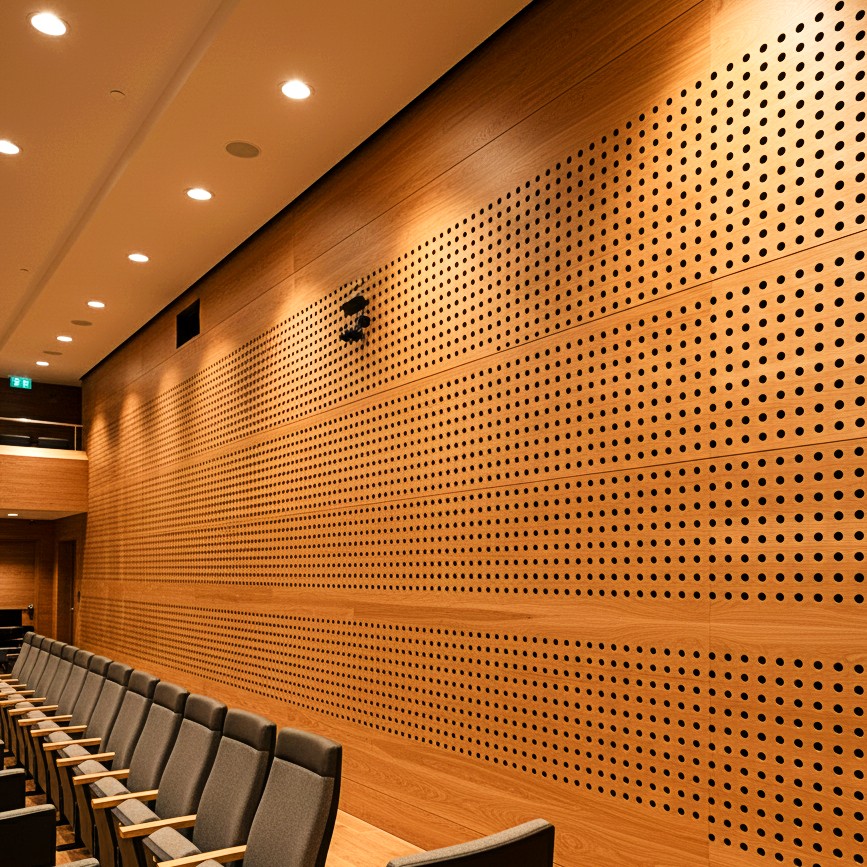
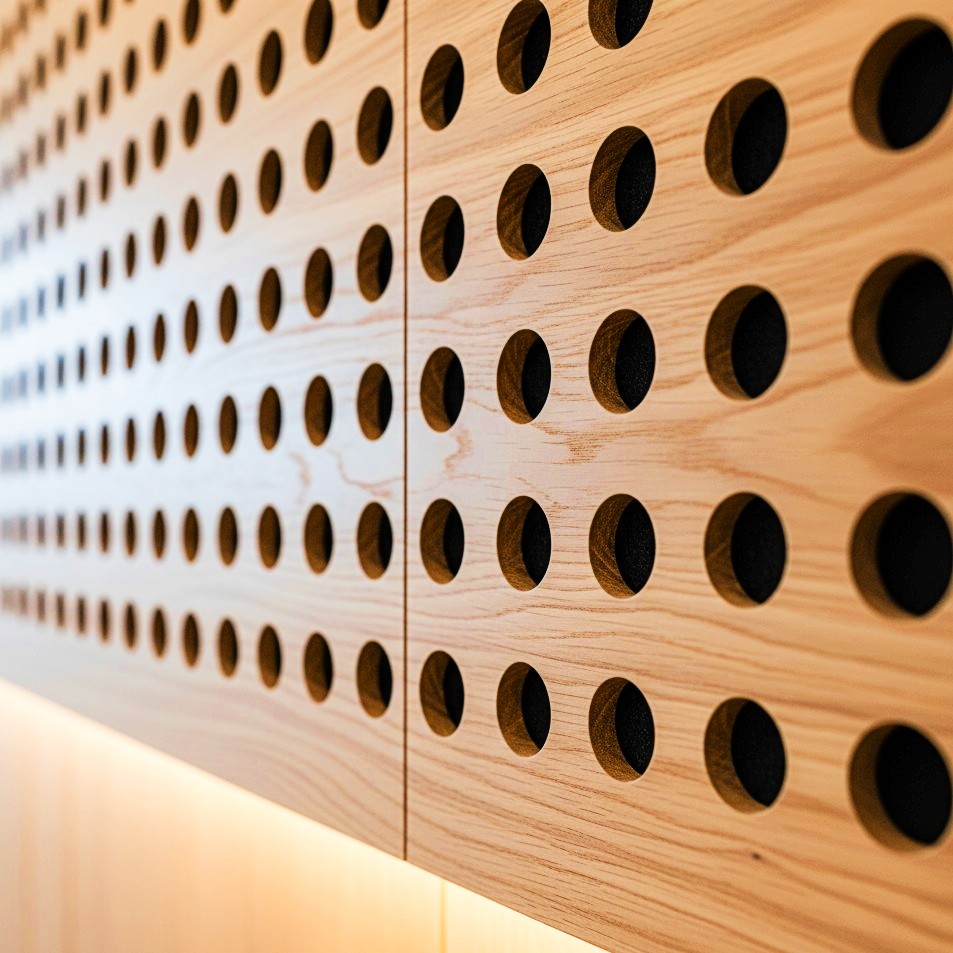
Perforated timber acoustic panels typically feature evenly distributed circular holes across the panel surface. The perforations create an open area through which sound energy can enter the acoustic cavity behind the panel.
The diameter of the perforations and the spacing between them influence the percentage of open area across the panel. This open area plays a role in determining how effectively the system allows sound energy to pass through the timber surface to the acoustic insulation behind.
Perforated panels are often selected where designers want a subtle acoustic treatment that preserves the natural appearance of timber while maintaining a consistent and orderly surface pattern.
How Slotted Timber Acoustic Panels Work
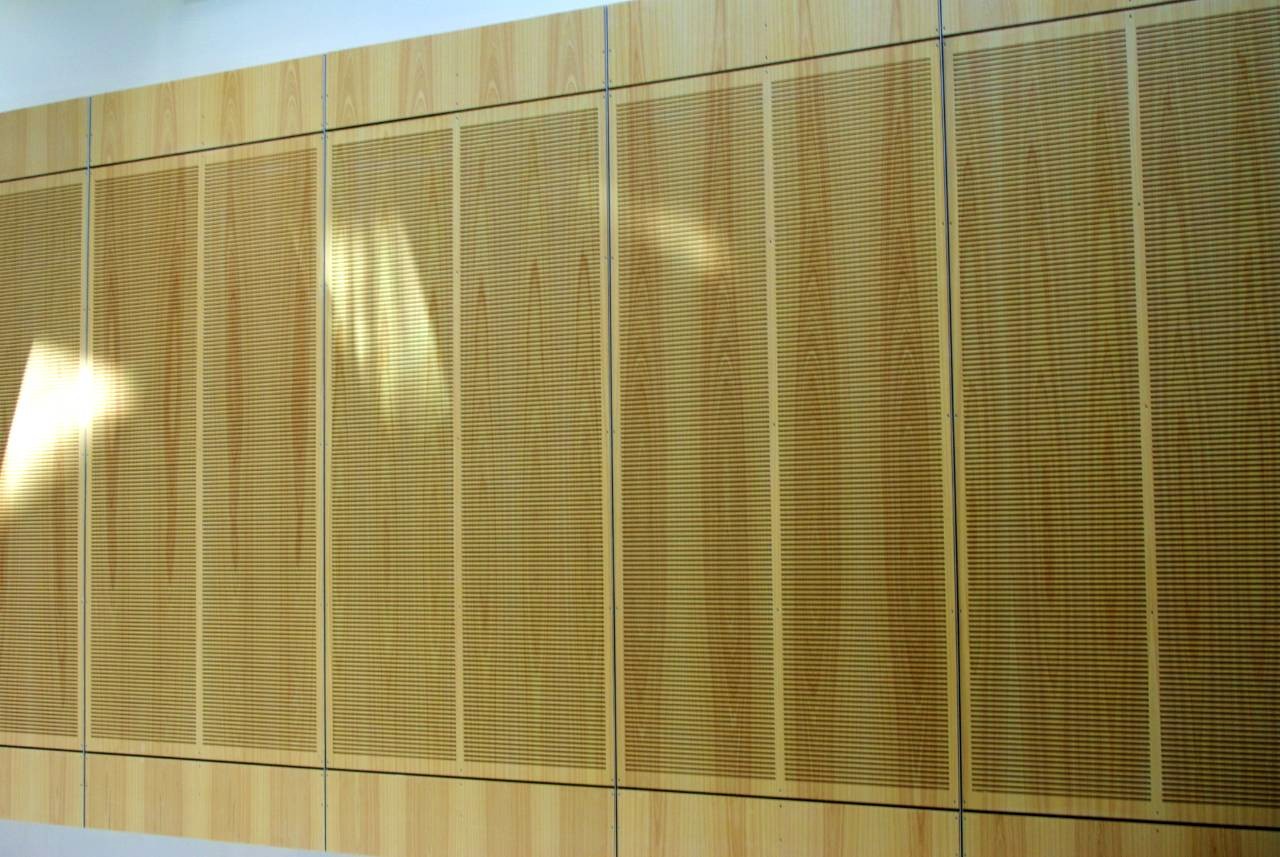
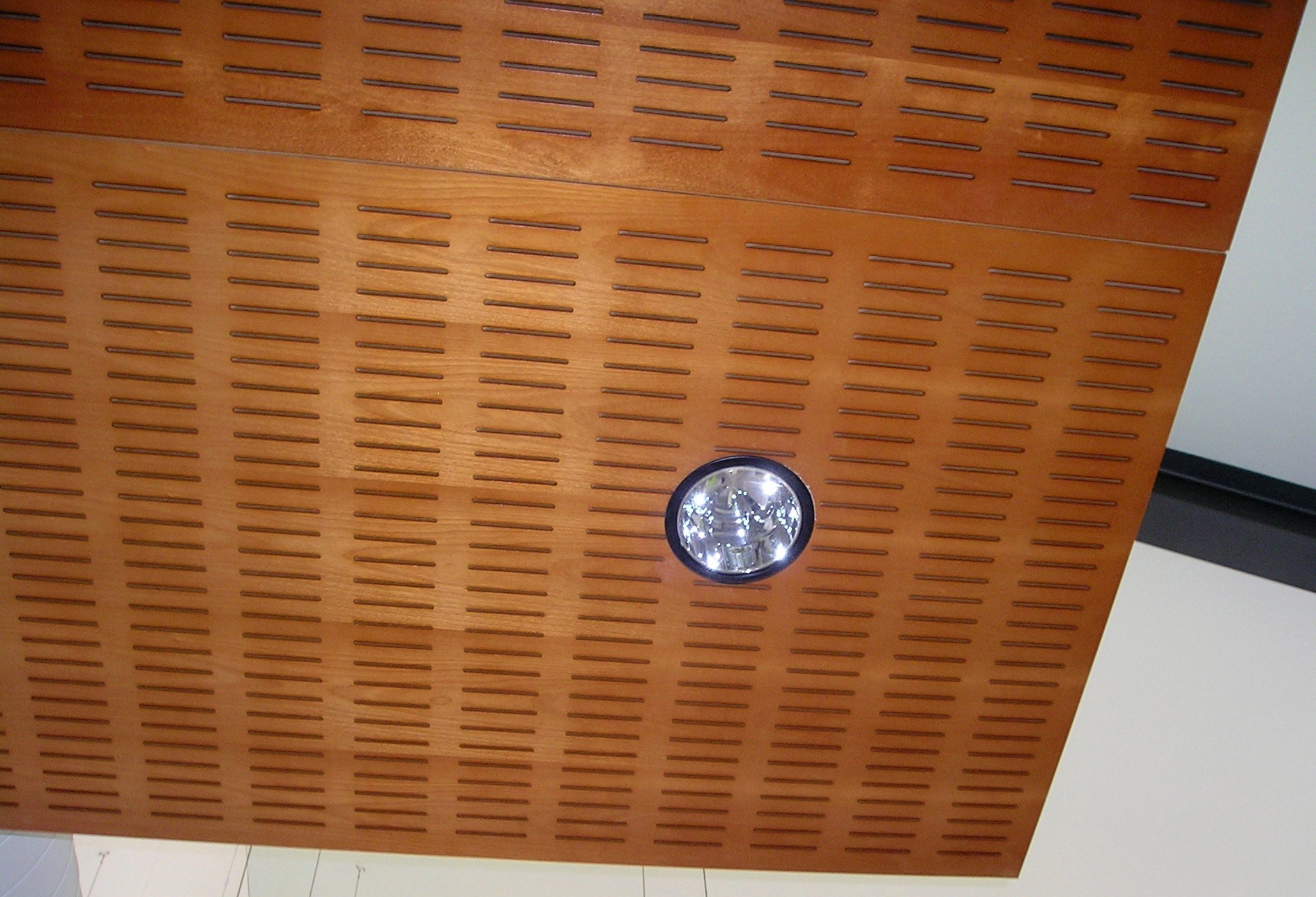
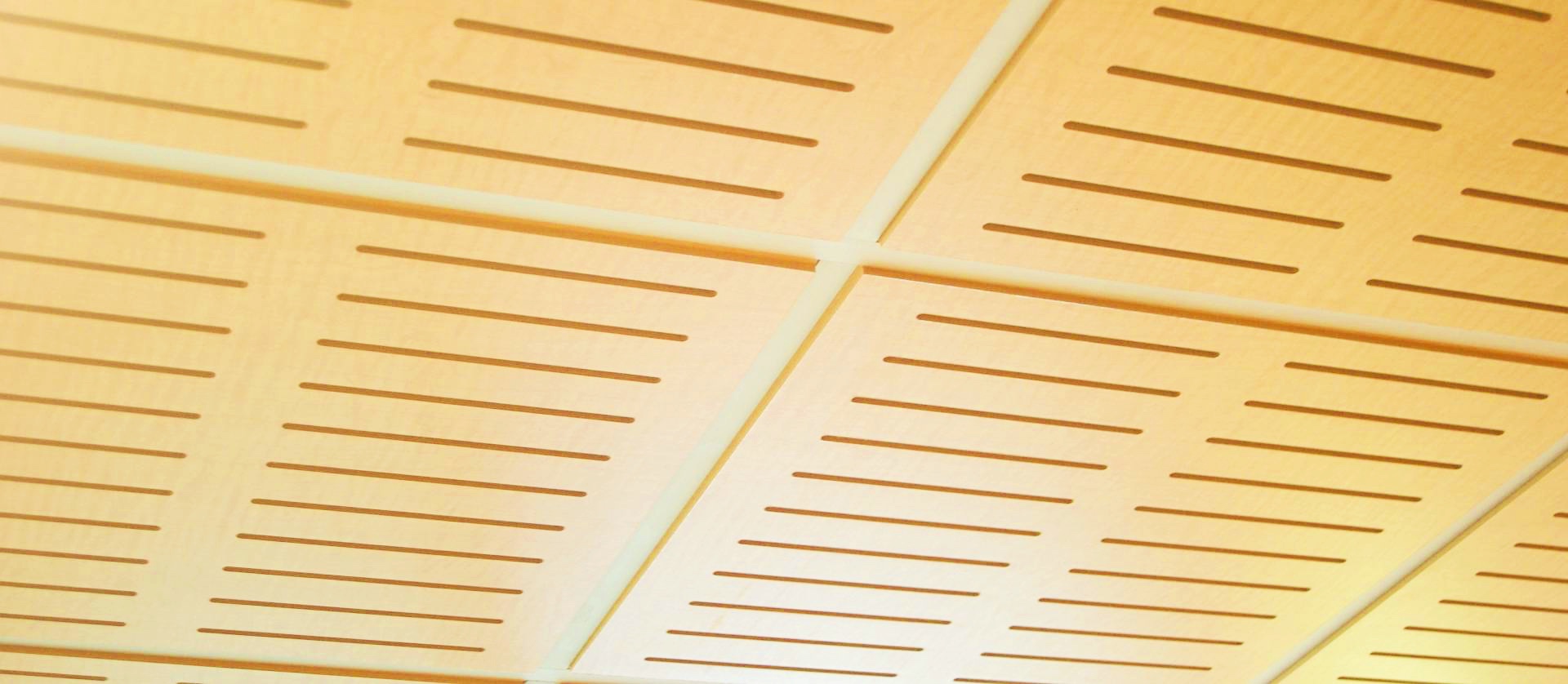
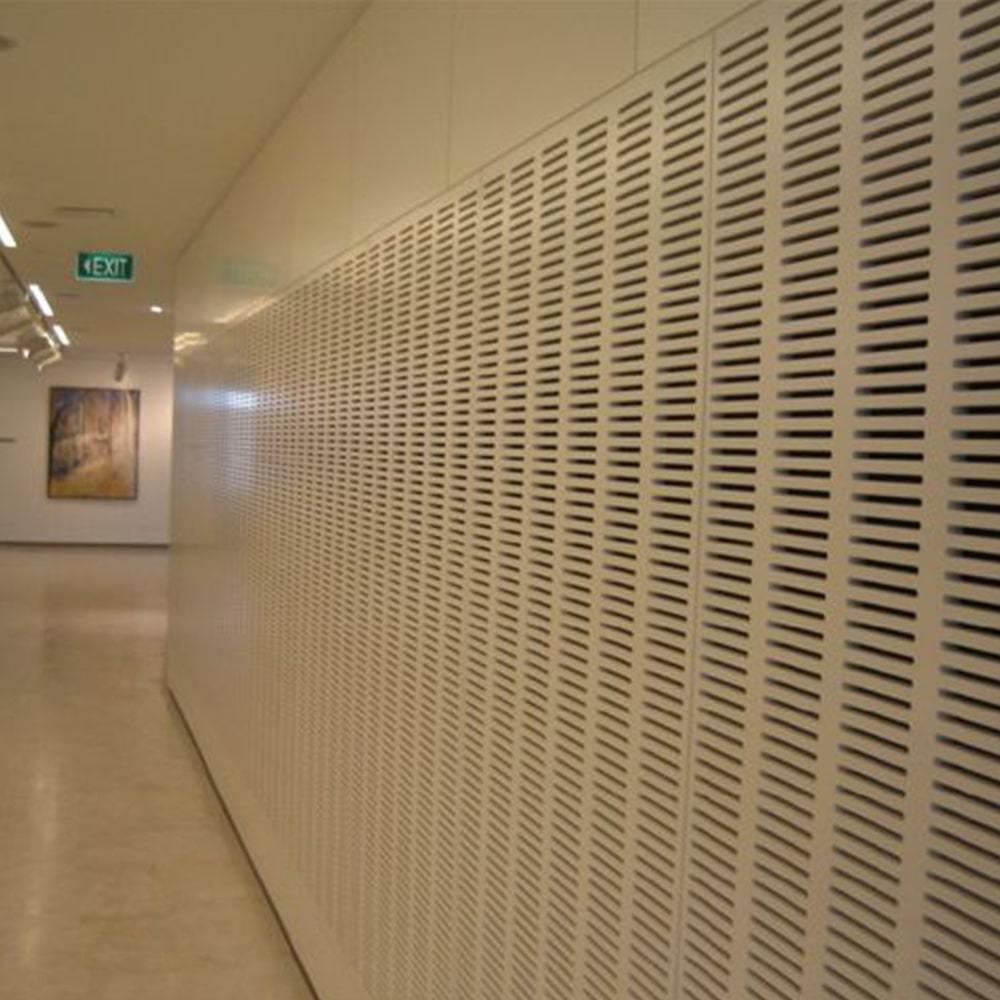
Slotted timber acoustic panels use narrow linear slots routed into the surface of the panel rather than circular perforations. These slots can run vertically or horizontally depending on the architectural intent of the design.
As with perforated systems, sound energy passes through the slots and into the acoustic backing material positioned behind the panel. The slot width, spacing and pattern influence how sound interacts with the panel surface and how it enters the acoustic cavity.
Slotted panels are frequently used in architectural interiors where designers want a strong linear pattern that complements the overall layout of the space.
Visual Differences Between Perforated and Slotted Panels
While perforated and slotted timber panels operate using the same acoustic principle, they create different visual outcomes within an interior.
Perforated panels often appear more uniform and understated, allowing the timber veneer or finish to remain the dominant visual element. The perforations can be subtle enough that the acoustic treatment blends into the overall design.
Slotted panels introduce a stronger directional pattern. The linear slots can emphasise the horizontal or vertical flow of the space and contribute to the architectural rhythm of ceilings or wall surfaces.
The choice between the two systems is therefore often influenced as much by architectural design considerations as by acoustic performance.
Typical Applications for Timber Acoustic Panels
Perforated and slotted timber acoustic panels are used across a wide range of architectural projects. Auditoriums, theatres and lecture theatres often incorporate perforated panels across large wall or ceiling surfaces to control reverberation while maintaining a refined timber finish.
Slotted timber panels are commonly used in offices, hospitality interiors, public buildings and commercial spaces where designers want a decorative timber element that also contributes to acoustic comfort.
Both systems allow architects to integrate acoustic treatment into the architectural language of the building rather than relying on exposed acoustic materials.
Choosing the Right Timber Acoustic Panel
When selecting between perforated and slotted timber acoustic panels, architects typically consider both acoustic requirements and visual design intent. Factors such as panel layout, perforation pattern, slot spacing, acoustic backing and overall coverage influence the final acoustic outcome.
By selecting the appropriate panel system and backing material, designers can achieve effective acoustic control while maintaining the aesthetic qualities that timber finishes bring to architectural interiors.
| Feature | Slotted Panels | Perforated Panels |
|---|---|---|
| Surface pattern | Linear routed slots | Circular perforations |
| Visual appearance | Strong linear pattern | More uniform surface |
| Acoustic mechanism | Sound passes through slots to acoustic backing | Sound passes through perforations to acoustic backing |
| Typical applications | Offices, hospitality interiors, public buildings | Auditoriums, theatres, lecture theatres |


Frequently Asked Questions
What is the difference between perforated and slotted timber acoustic panels?
Perforated timber acoustic panels use circular holes across the surface of the panel, while slotted panels use routed linear slots. Both systems allow sound energy to pass through the timber surface to acoustic insulation positioned behind the panel.
Do timber acoustic panels absorb sound?
Timber itself does not absorb sound. Acoustic performance is achieved by allowing sound to pass through perforations or slots in the timber surface to insulation placed behind the panel where sound energy is absorbed.
Where are perforated timber acoustic panels commonly used?
Perforated timber panels are commonly used in auditoriums, lecture theatres, public buildings and hospitality interiors where both acoustic performance and decorative timber finishes are required.
When should slotted timber acoustic panels be used?
Slotted timber panels are often selected in offices, commercial interiors and public spaces where designers want a strong linear architectural pattern combined with acoustic treatment.
Do timber acoustic panels require acoustic backing material?
Yes. The acoustic insulation positioned behind the timber panel surface performs the sound absorption. The perforations or slots allow sound to pass through the timber surface to that backing material.