


Architectural Timber Acoustic Panels
Timber acoustic panels are widely used in architectural interiors where designers want to combine decorative timber finishes with improved acoustic conditions. Auditoriums, offices, lecture theatres, hospitality venues and public buildings frequently require acoustic treatment to control reverberation and improve speech clarity.
Timber acoustic systems allow designers to introduce acoustic control without compromising the visual character of the space. By combining decorative timber surfaces with acoustic backing materials, these systems help manage sound reflections while maintaining the warmth and texture associated with timber interiors.
Timber Acoustic Panels – Complete Architectural Guide
Timber acoustic panels are typically manufactured using perforated, slotted or grooved timber surfaces. These surface treatments allow sound energy to pass through the timber face into acoustic insulation positioned behind the panel.
It is important to understand that timber itself does not absorb sound. A solid timber surface reflects sound energy within a room. In acoustic timber panel systems, the timber acts as a decorative surface while the acoustic insulation positioned behind the panel performs the sound absorption.
This combination allows architects to achieve both acoustic control and a high-quality interior finish.
How Timber Acoustic Panels Work
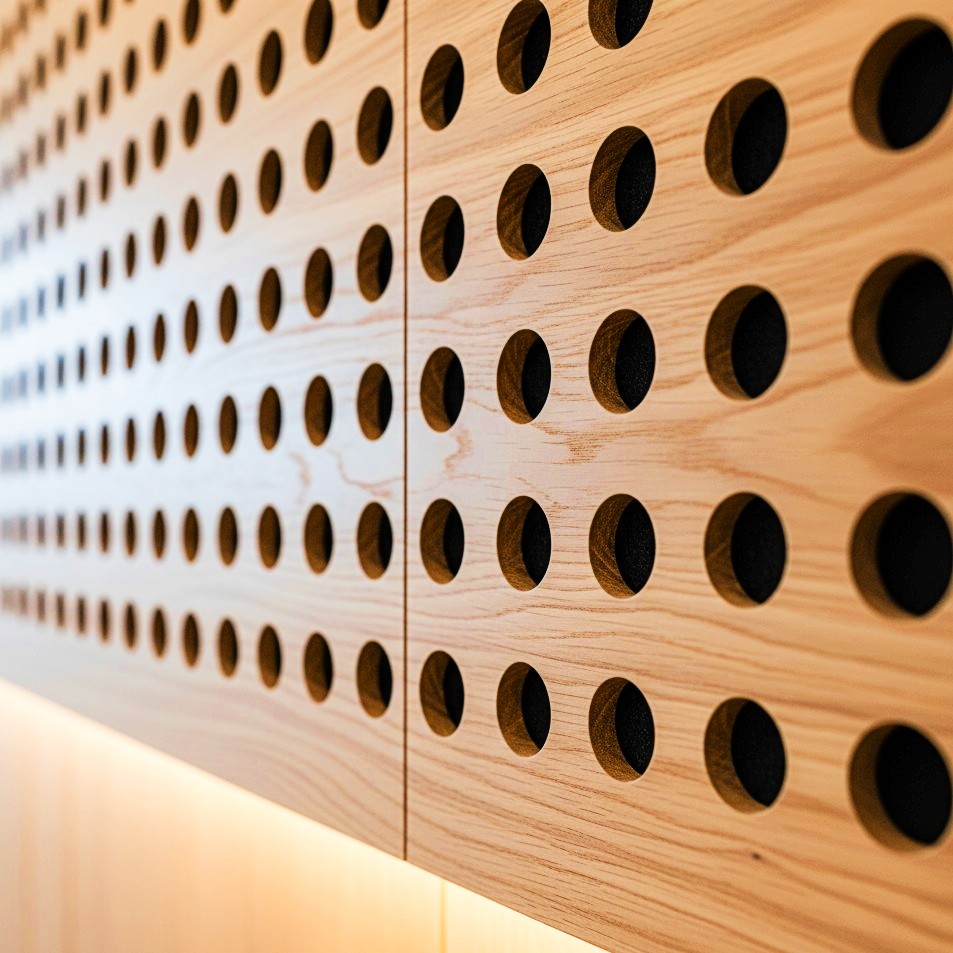
Timber acoustic panels operate by allowing sound waves to pass through openings in the timber surface. These openings may take the form of circular perforations, routed slots or decorative grooves. Sound energy enters the cavity behind the panel and is absorbed by acoustic insulation placed within that cavity.
The acoustic performance of a timber panel system depends on several factors including the percentage of open area in the timber surface, the thickness of the acoustic insulation and the depth of the cavity behind the panel.
By adjusting these factors, acoustic designers can tailor timber acoustic systems to suit the acoustic requirements of different types of spaces.
Types of Timber Acoustic Panels
Architectural timber acoustic systems are typically available in several formats, each offering different visual characteristics and acoustic behaviour.
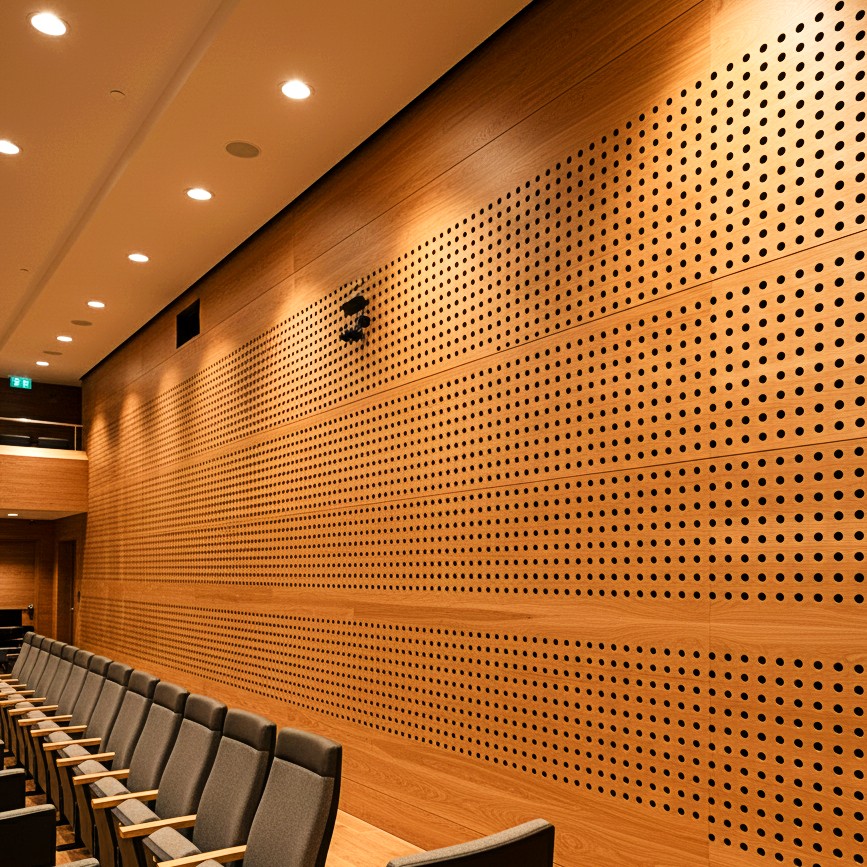
Perforated timber panels use circular holes distributed across the surface of the panel. These panels often provide a subtle acoustic treatment that allows the timber finish to remain visually dominant.
Slotted timber panels use routed linear slots across the surface of the panel. These panels create stronger architectural patterns and are often used in offices and hospitality interiors.
Grooved timber panels incorporate decorative surface grooves that allow sound to enter the acoustic backing material while creating a textured timber appearance.
Each of these panel types allows architects to integrate acoustic treatment into the design of walls and ceilings.
Applications for Timber Acoustic Panels
Timber acoustic panels are commonly used in environments where both acoustic performance and interior design quality are important.
Typical applications include auditoriums, theatres, lecture theatres, offices, conference rooms, hospitality venues, public buildings and cultural spaces.
In these environments, controlling reverberation improves speech clarity and reduces background noise, creating a more comfortable interior environment for occupants.
Timber Acoustic Walls and Ceilings
Timber acoustic panels can be installed on both walls and ceilings depending on the acoustic requirements of the space. Wall panels are often used in auditoriums and lecture theatres where large reflective wall surfaces require acoustic treatment.
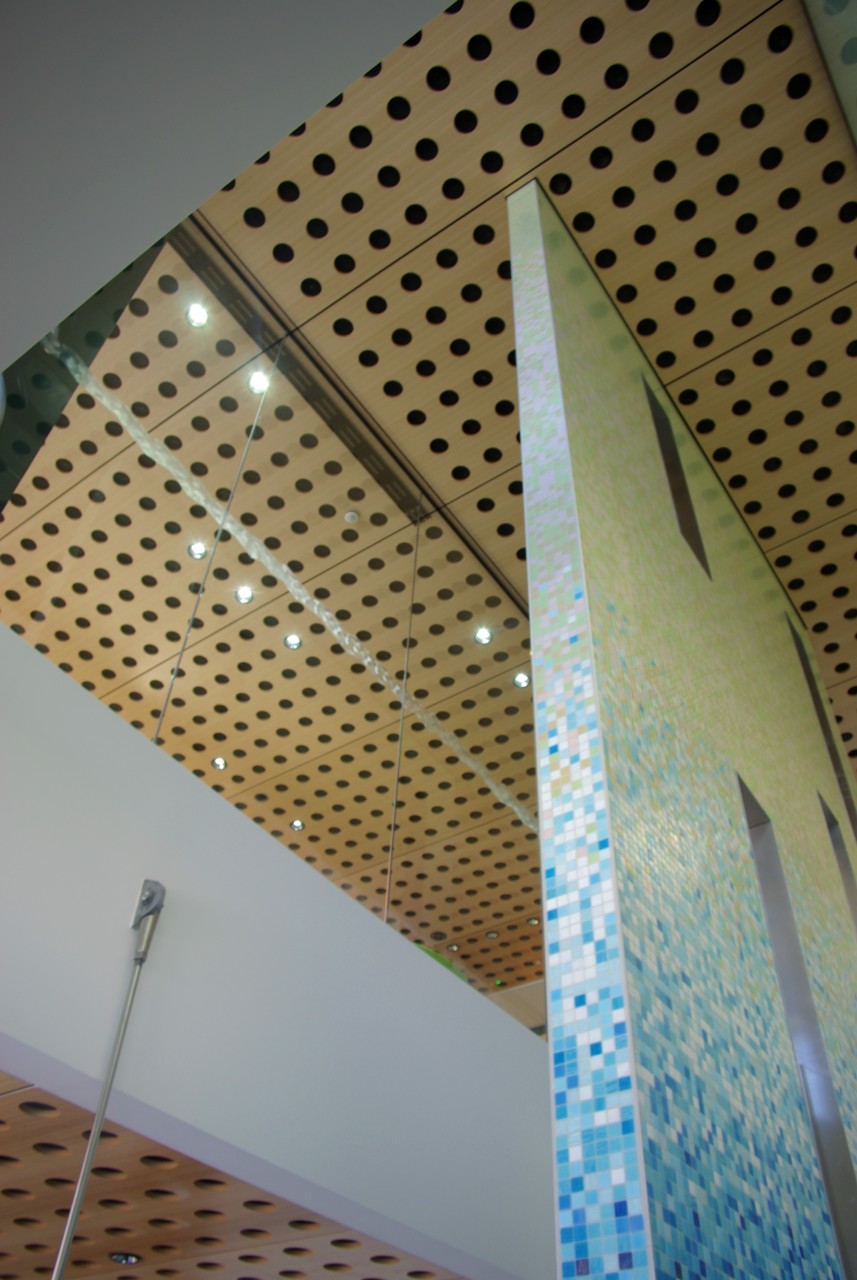
Ceiling installations are common in offices and public interiors where designers want to maintain visual continuity while introducing acoustic control above the occupied space.
In many projects, a combination of wall and ceiling acoustic treatments provides the most balanced acoustic result.
Selecting the Right Timber Acoustic System
Choosing the right timber acoustic panel system involves balancing acoustic requirements with architectural design goals. Designers typically consider factors such as perforation pattern, panel layout, backing insulation and the overall visual character of the space.
By selecting the appropriate panel system and acoustic backing, timber acoustic panels can contribute both to the acoustic comfort and architectural quality of interior environments.



Common Timber Acoustic Panel Types
| Panel Type | Surface Pattern | Typical Applications |
|---|---|---|
| Perforated Timber Acoustic Panels | Circular perforations distributed across the timber surface | Auditoriums, lecture theatres, performance venues |
| Slotted Timber Acoustic Panels | Linear routed slots creating strong architectural lines | Offices, hospitality interiors, boardrooms |
| Grooved Timber Acoustic Panels | Decorative grooves allowing sound to reach acoustic backing | Commercial interiors, cultural buildings, public spaces |
Frequently Asked Questions
Do timber acoustic panels absorb sound?
Timber itself does not absorb sound. Acoustic absorption occurs in insulation positioned behind the panel surface.
Where are timber acoustic panels used?
Timber acoustic panels are used in auditoriums, offices, lecture theatres, hospitality venues and public buildings.
What is the difference between perforated and slotted timber panels?
Perforated panels use circular holes while slotted panels use routed linear slots to allow sound energy to reach the acoustic backing material.
Can timber acoustic panels be used on ceilings?
Yes. Timber acoustic panels are commonly installed on ceilings and walls depending on the acoustic design requirements.
Do timber acoustic panels require acoustic backing?
Yes. The acoustic insulation positioned behind the timber panel provides the sound absorption.
Speak With Murano About Timber Acoustic Panels
If you are planning an auditorium, office, hospitality venue or public building and need decorative timber acoustic panels, contact Murano Acoustics to discuss perforated, slotted and grooved timber acoustic systems for your project.