

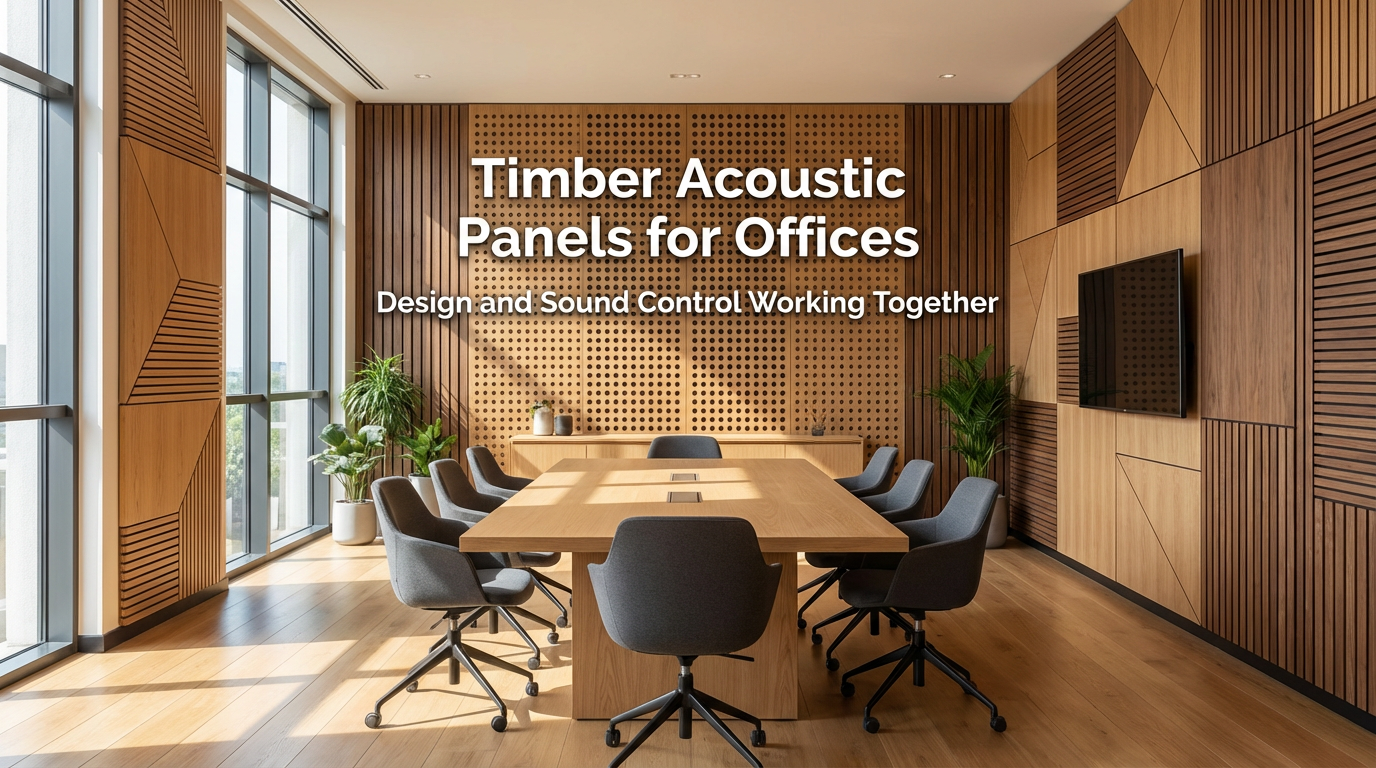
Timber Acoustic Panels for Offices – Combining Design and Sound Control
Modern office interiors are increasingly designed with strong architectural character. Natural materials, warm finishes and feature walls are often used to create spaces that feel welcoming and professional. However, many contemporary office designs also include hard surfaces such as glass, concrete and exposed ceilings, which can lead to unwanted sound reflections.
Timber acoustic panels provide a solution that balances architectural design with acoustic performance. By combining decorative timber finishes with acoustic absorption, these systems help control reverberation while maintaining the visual quality of the interior space.
For architects and designers, timber acoustic panels allow sound control to become part of the design language of the building rather than simply a technical requirement.
Why Acoustic Design Matters in Offices
Noise is one of the most common challenges in modern workplaces. Open plan layouts encourage collaboration but can also allow conversations and background sounds to travel throughout the space.
Without acoustic treatment, sound reflections from walls and ceilings increase reverberation, making it harder to concentrate and reducing speech clarity in meetings and discussions.
Acoustic panels reduce these reflections and create a more balanced acoustic environment. When acoustic systems are integrated into the architectural design, the result is both functional and visually refined.
How Timber Acoustic Panels Work
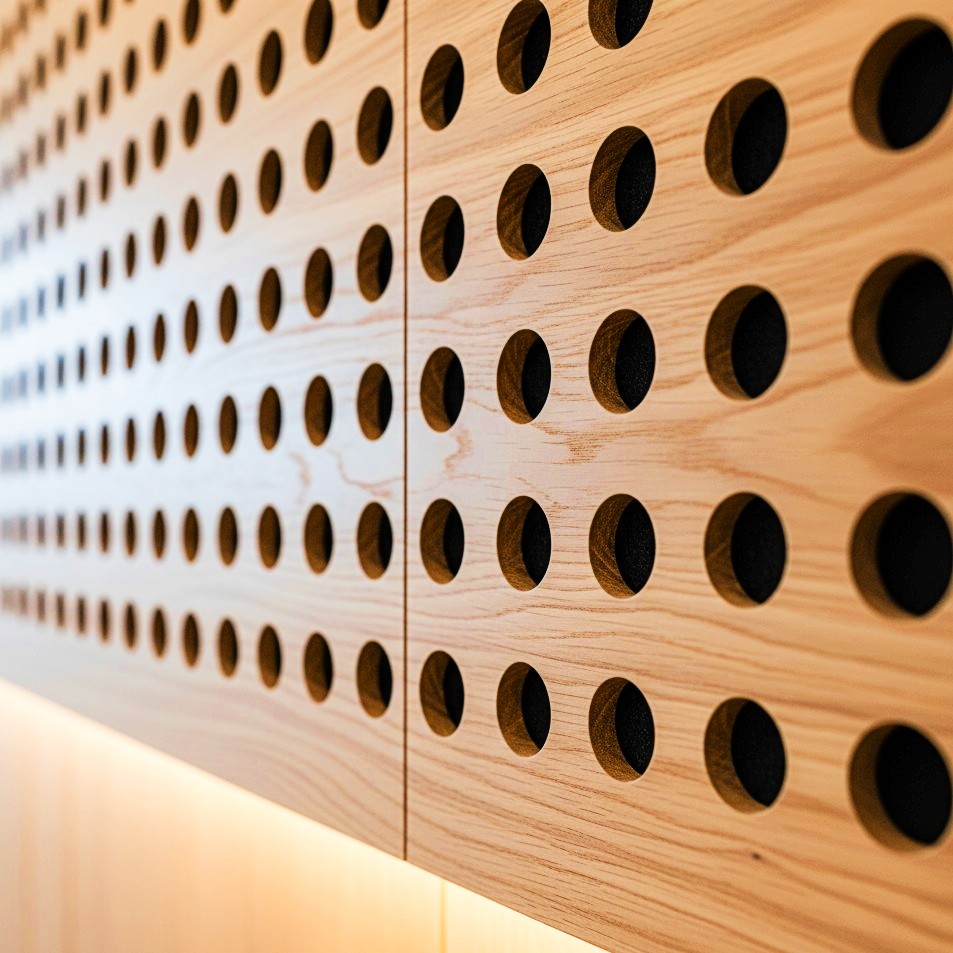
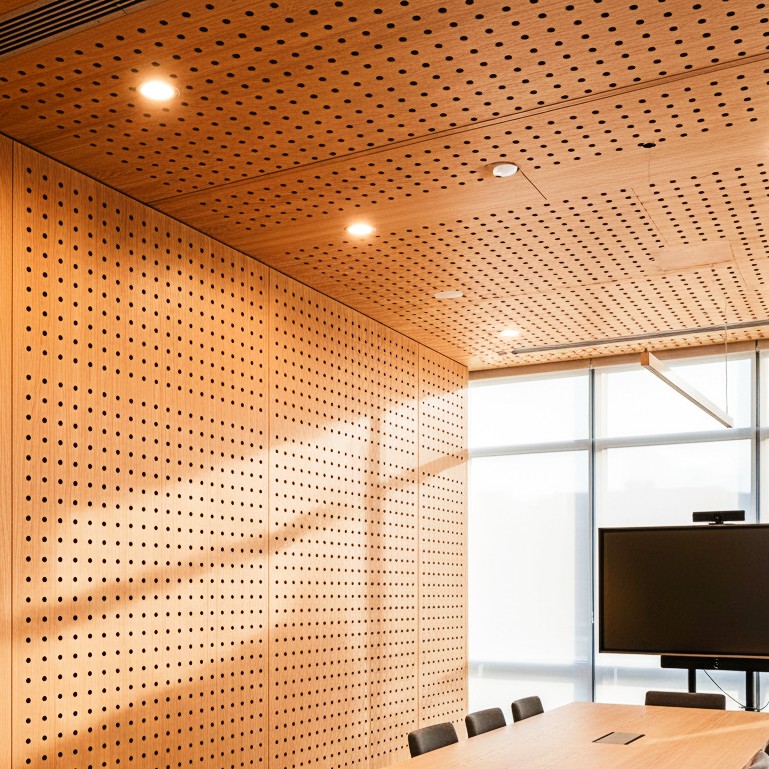
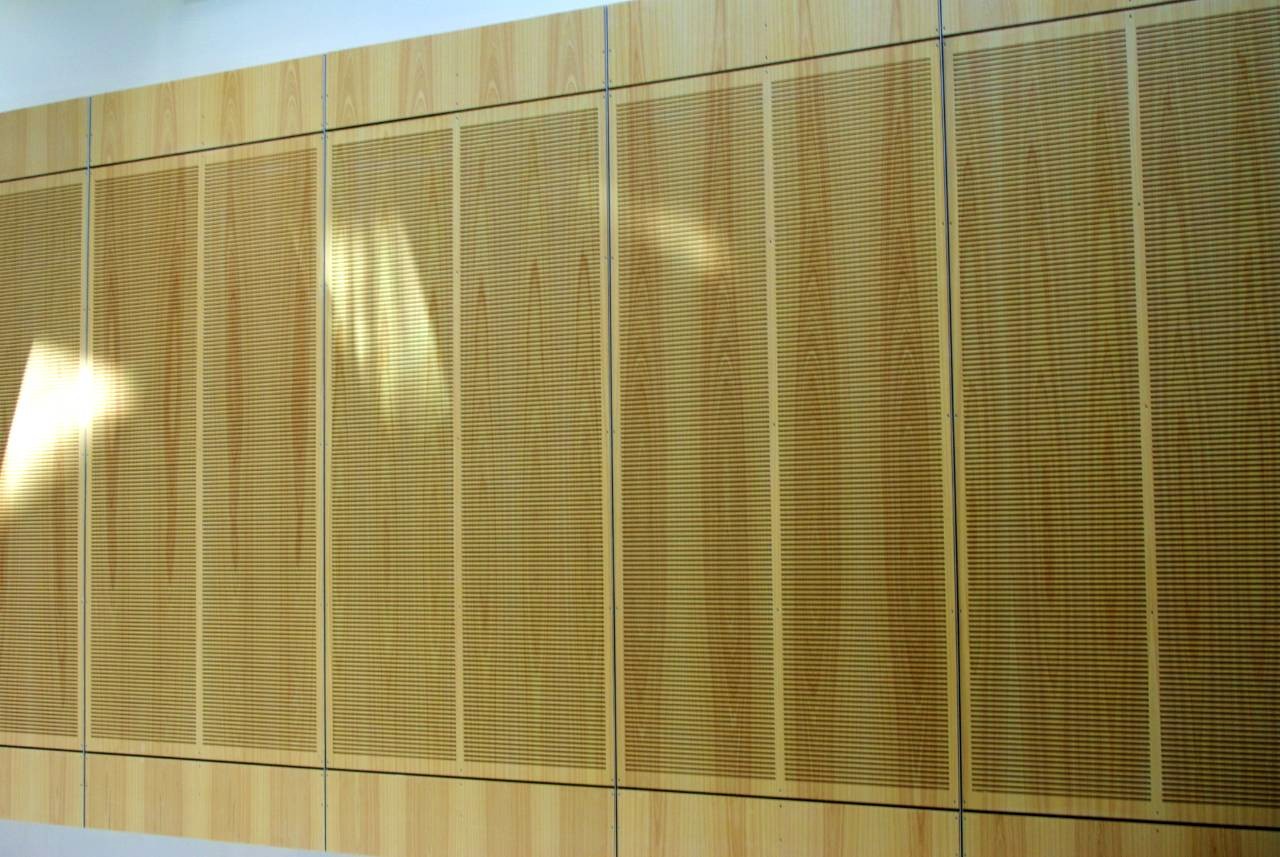
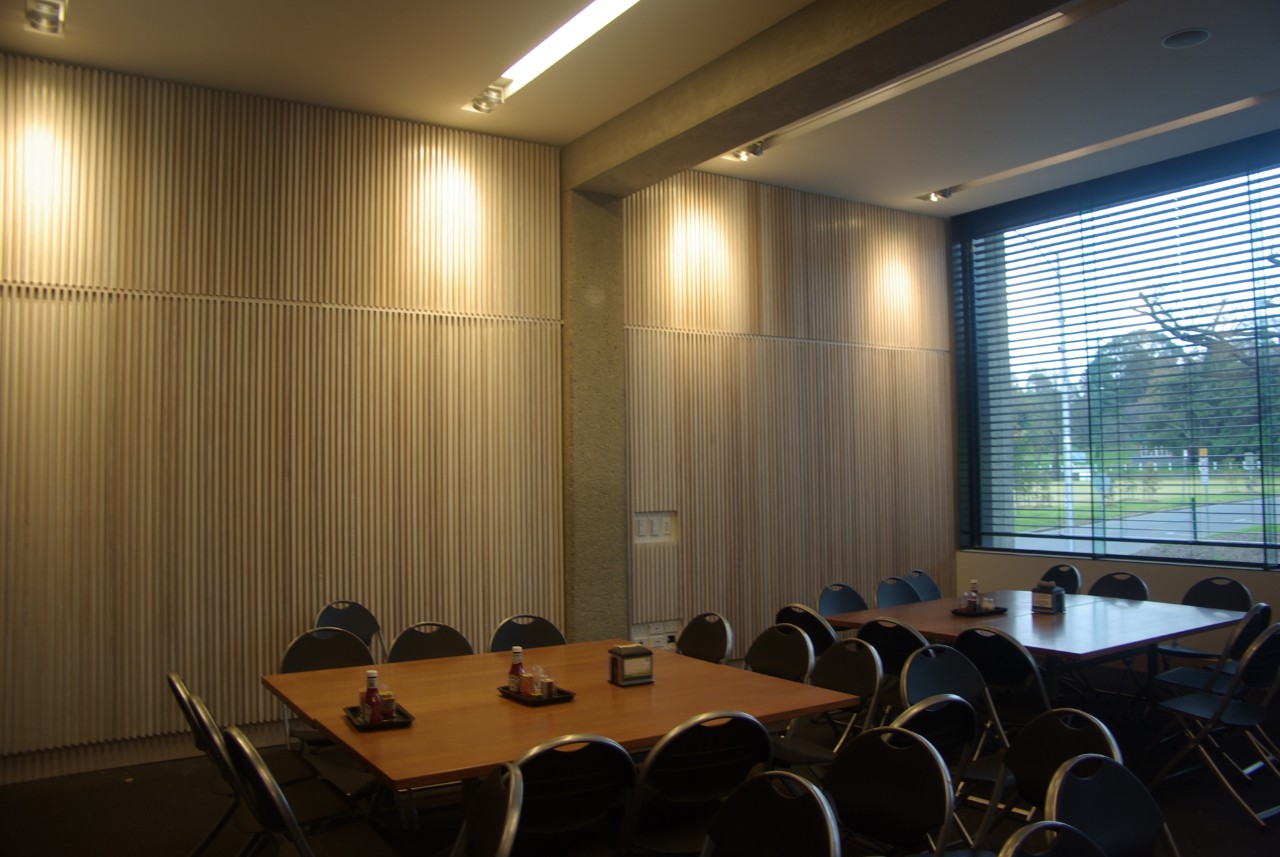
Timber acoustic panels typically consist of a decorative timber surface combined with an acoustic backing material. The timber face may include perforations, slots or micro-perforations that allow sound energy to pass through the surface and be absorbed by the acoustic core behind it.
This process reduces reflected sound energy within the room, helping control reverberation and improving overall acoustic comfort.
Because the visible surface is timber, the panels can be designed to complement interior architecture while still providing effective sound absorption.
Where Timber Acoustic Panels Are Used in Offices
Timber acoustic panels are commonly used in areas where both design impact and acoustic performance are important.
- Boardrooms
- Meeting rooms
- Reception areas
- Executive offices
- Training spaces
- Feature walls in open plan offices
These installations often become a focal point of the interior while quietly improving the acoustic environment of the space.
Combining Timber with Other Acoustic Systems
Many projects combine different acoustic materials to achieve the best balance of design and performance.
Fabric acoustic panels, such as those manufactured by Sontext, are often used in large wall areas where high sound absorption is required. Polyester acoustic panels available through Decrasound may also be used in ceilings, screens or decorative acoustic installations.
By combining these materials, designers can achieve a layered acoustic strategy that addresses both aesthetics and acoustic performance.
Typical Applications and Benefits
| Office Area | Timber Acoustic Application | Benefit |
|---|---|---|
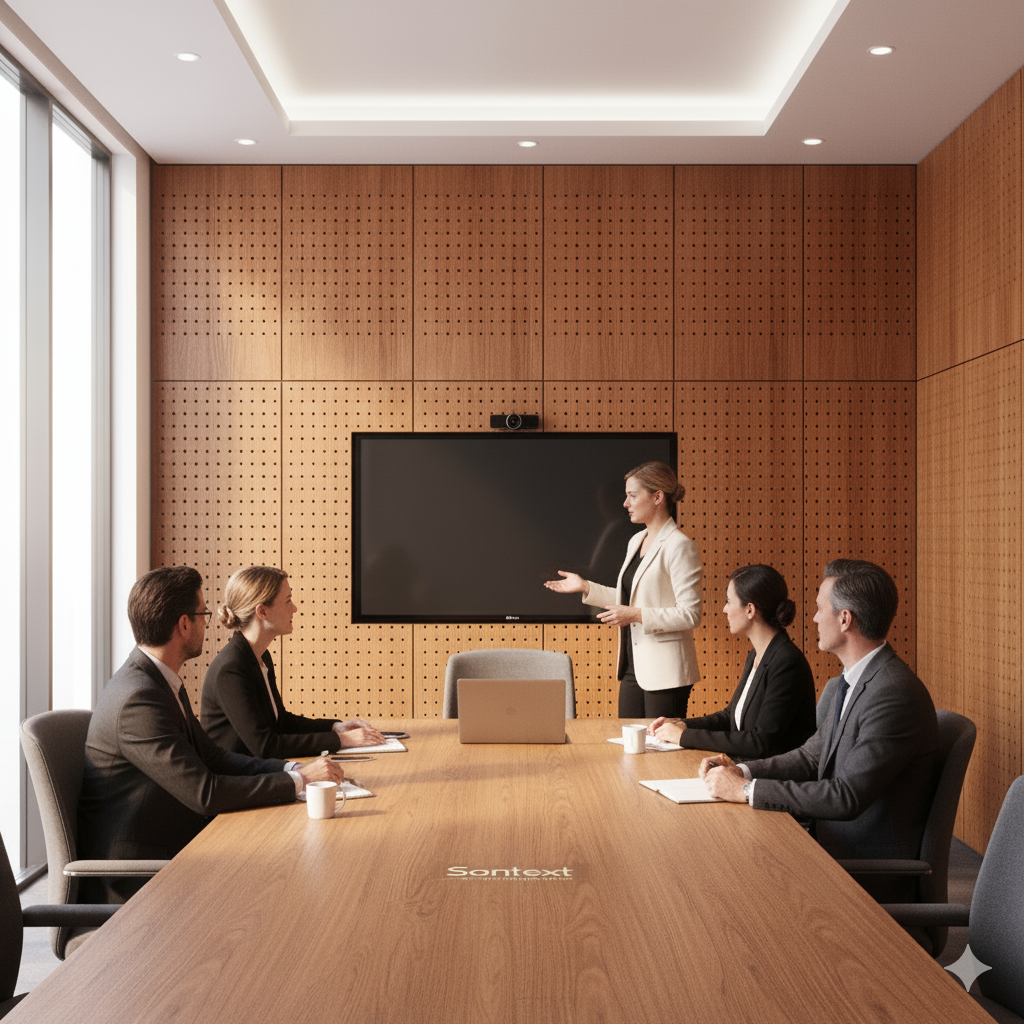
| Boardrooms | Decorative timber acoustic wall panels | Improves speech clarity during meetings |
| Reception Areas | Timber feature acoustic walls | Combines acoustic performance with architectural design |
| Meeting Rooms | Perforated timber acoustic panels | Reduces echo and improves communication |
| Executive Offices | Timber acoustic feature walls | Creates a refined and comfortable acoustic environment |
Frequently Asked Questions
Do timber acoustic panels actually absorb sound?
Yes. The perforations or slots in the timber surface allow sound energy to pass through the panel and be absorbed by the acoustic material behind it.
Are timber acoustic panels decorative?
Timber acoustic panels are designed to integrate with architectural interiors, providing both aesthetic value and acoustic performance.
Where are timber acoustic panels most commonly used?
They are commonly used in boardrooms, reception areas, meeting rooms and feature wall applications within offices.
Can timber panels be combined with other acoustic materials?
Yes. Timber panels are often used together with fabric acoustic panels or polyester acoustic panels to create a balanced acoustic strategy.
Do timber acoustic panels improve speech clarity?
Yes. By reducing reverberation, acoustic panels help conversations remain clearer and easier to understand within the space.

Architectural Timber Acoustic Solutions
Murano Acoustic timber panels combine architectural design with acoustic performance. If you are planning an office or commercial project, our team can assist in selecting the right system.